Nov. 09, 2026
Many processors need a China Chloro Silane Supplier that can deliver consistent reactivity, not simply the lowest drum price. A small change in water content, distillation cut, or chloride level can alter silicone molecular weight, cure behavior, adhesion, and final electrical performance. Hocon addresses this practical problem by connecting chlorosilane selection with the complete silicone-material process: specification, safe handling, controlled hydrolysis, formulation, testing, and batch traceability. In advanced applications, chlorosilane surface treatment, silicone polymer precursors, and low-volatile silicone materials are becoming important for electric vehicles, semiconductor packaging, medical devices, and precision coatings.

Why Chloro Silane Manufacturer Selection Matters in the Current Market
Advanced silicone buyers are facing three connected pressures. First, electronics and battery manufacturers require lower ionic contamination and more predictable dielectric performance. Second, medical and personal-care applications demand controlled residuals, documentation, and repeatable biocompatibility testing. Third, processors are under pressure to reduce solvent use, emissions, waste, and unplanned downtime.
Chlorosilanes are reactive silicon-containing intermediates used to build silicone polymers and functional silanes. Common examples include methyltrichlorosilane, dimethyldichlorosilane, trimethylchlorosilane, phenyltrichlorosilane, and vinyl-containing chlorosilanes. Their value comes from controlled Si–Cl reactivity: when a chlorosilane contacts water or an alcohol, it can form silanol or alkoxy-silane groups while releasing hydrogen chloride or another acidic by-product.
For example, the hydrolysis of dimethyldichlorosilane can be represented in simplified form as:
(CH3)2SiCl2 + 2H2O → (CH3)2Si(OH)2 + 2HCl
The resulting silanol groups can condense into siloxane bonds. Because water content, temperature, acidity, and residence time influence this reaction, a supplier’s consistency directly affects the downstream silicone process. A purchasing decision based only on assay percentage may therefore miss the variables that control gel particles, viscosity drift, cure inhibition, corrosion risk, and batch-to-batch appearance.
China Chloro Silane Supplier Requirements for Process Stability
A capable China Chloro Silane Supplier should provide more than a certificate of analysis. Buyers should request the product name and CAS number, assay method, water content, color, density, chloride-related impurities, nonvolatile residue, packaging specification, storage conditions, production lot, retest date, and transport classification. For sensitive applications, the supplier should also explain sampling procedures and whether the reported value is a single result or a defined statistical release range.
Hocon can be evaluated against a practical supplier scorecard:
- Identity control: verify the exact chlorosilane structure, substitution pattern, and CAS number.
- Moisture control: require a validated Karl Fischer or equivalent method where moisture affects hydrolysis.
- Impurity control: define limits for unreacted feedstocks, higher-boiling components, metals, and nonvolatile residue.
- Packaging integrity: use compatible, sealed containers with dry-gas protection where required.
- Change notification: establish written notice requirements for raw-material, plant, process, or specification changes.
- Application support: request small-scale hydrolysis, adhesion, rheology, and cure screening before commercial adoption.
Key Drivers Behind Advanced Silicone Material Innovation
Chloro Silane Manufacturer Innovation for Electrification
Electric vehicles, charging equipment, power modules, and energy-storage systems require materials that can electrically insulate components while transferring heat and tolerating repeated temperature changes. Silicone elastomers and gels are used in selected sealing, potting, gap-filling, and thermal-management designs because their siloxane backbone can retain flexibility over a broad temperature range. The final performance, however, depends on the entire formulation—not on the chlorosilane alone.
Chlorosilane-derived silicone materials can be designed around several measurable targets:
- thermal conductivity of the cured compound, commonly reported in W/(m·K);
- volume resistivity and dielectric strength for electrical insulation;
- compression set after a specified temperature and time;
- weight loss or volatile release under a defined heating program;
- adhesion retention after humidity, thermal cycling, or salt exposure.
Buyers should compare test conditions before comparing numbers. A thermal-conductivity value measured on a filled pad at 25°C cannot be directly compared with a value measured on a cured gel at 100°C. ASTM D5470 is widely used for thermal-transmission properties of thermally conductive electrical insulation materials, while ASTM D149 is commonly used for dielectric breakdown voltage of solid electrical insulation. The selected standard and specimen geometry should appear in the technical agreement.
Chloro Silane Manufacturer Innovation for Semiconductor Packaging
Semiconductor packaging creates a difficult combination of requirements: low contamination, controlled outgassing, dimensional stability, adhesion to dissimilar substrates, and resistance to thermal cycling. Functional silanes and silicone materials may be used in primers, protective coatings, release systems, encapsulants, and moisture-resistant interfaces.
In this area, a buyer should not accept the phrase “electronic grade” without a test plan. Relevant checks can include ion chromatography for chloride and other ionic species, ICP-MS or ICP-OES for trace metals, thermogravimetric analysis for volatile loss, Fourier-transform infrared spectroscopy for identity, and rheological testing for dispensing behavior. The correct acceptance level depends on the package architecture and process temperature; it should be agreed with the device manufacturer rather than copied from a general-purpose silicone specification.
Chloro Silane Manufacturer Development for Medical and Healthcare Materials
Medical silicone development is controlled by the final device, manufacturing process, sterilization method, and intended contact. A chlorosilane intermediate is not automatically suitable for medical use simply because the resulting polymer is silicone-based. Residuals, extractables, leachables, catalyst residues, colorants, and processing aids all require assessment.
Manufacturers commonly build their evaluation around ISO 10993 biological-evaluation principles, relevant United States Pharmacopeia chapters where applicable, and the device risk-management process. Ethylene oxide, gamma radiation, electron-beam treatment, steam, and other sterilization routes can affect mechanical properties and extractable profiles differently. The practical solution is to test the complete cured article after the intended sterilization cycle, not only the incoming chlorosilane.
Emerging Trends in Chloro Silane Applications
1. Low-Volatile Silicone Materials from Better Hydrolysis Control
Customers increasingly want silicone products with lower volatile release and fewer rework problems. The trend is not solved by one additive. It requires control of chlorosilane purity, hydrolysis conditions, condensation completion, stripping, catalyst concentration, and packaging.
A useful development protocol measures volatile loss using a defined temperature, time, sample mass, and analytical method. For example, a buyer may specify a thermogravimetric screening temperature and then confirm the result by headspace gas chromatography for the compounds relevant to the application. Reporting “low odor” or “low volatility” without a method is not a meaningful technical claim.
This trend is particularly relevant to optical assemblies, sensors, automotive interiors, and enclosed electronics, where a small amount of condensable material can deposit on a lens, reflector, connector, or display surface.
2. Functional Chloro Silane Surface Treatment for Difficult Substrates
Glass, aluminum, stainless steel, ceramics, engineering plastics, and composite materials do not present the same surface chemistry. Functional silanes can improve wetting and interfacial bonding, but the result depends on surface cleanliness, oxide condition, primer concentration, drying time, and cure temperature.
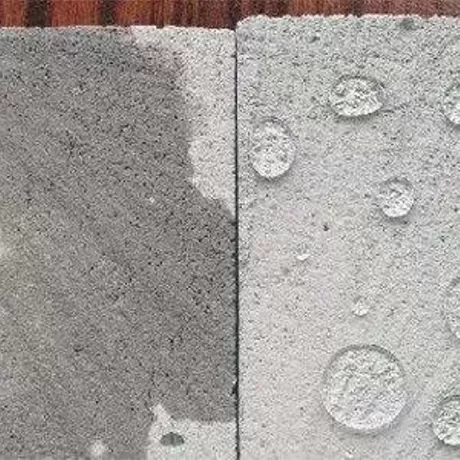
For process development, contact-angle measurement can show whether a treatment changes surface wettability, while lap-shear, peel, or pull-off testing can quantify adhesion. A useful qualification may compare initial adhesion with adhesion after 85°C/85% relative humidity exposure or after a defined number of thermal cycles. The precise condition should reflect the product’s service environment.
Hocon’s role in this type of project is to help match chlorosilane functionality—such as methyl, vinyl, phenyl, or multifunctional substitution—to the resin, filler, and substrate rather than treating “silane coupling agent” as a single product category.
3. Silicone Thermal-Management Materials for Batteries and Power Electronics
Thermal-management formulations are moving toward higher filler loading, thinner bond lines, improved pumpability, and stronger electrical insulation. These targets conflict with one another: increasing ceramic or mineral filler can improve thermal conductivity but also increase viscosity, reduce elongation, and complicate dispensing.
Chlorosilane-derived polymer architecture and surface treatment can influence filler wetting and network formation. During qualification, buyers should record:
- thermal conductivity at the actual bond-line thickness;
- viscosity at the dispensing shear rate, not only at one low-shear point;
- cure time at the actual assembly temperature;
- adhesion to the battery housing or power-module substrate;
- insulation resistance after thermal aging and humidity exposure;
- pumpability and settling behavior during the stated storage period.
These measurements solve a common purchasing problem: a material can meet a laboratory thermal-conductivity target but fail on the production line because it cannot be dispensed consistently through the selected nozzle or because its cure profile does not match takt time.
4. Precision Silicone Coatings for Electronics, Optics, and Sensors
Thin silicone coatings are being developed for conformal protection, optical damping, moisture resistance, and controlled release. The performance challenge is to achieve a uniform film without bubbles, craters, fisheyes, or excessive shrinkage.
Coating buyers should define wet-film thickness, cured-film thickness, surface energy, haze or transmittance where optics are involved, adhesion class, pencil hardness or abrasion resistance where relevant, and moisture-barrier performance. ASTM D3359 cross-cut adhesion testing may be useful for some coated substrates, but it is not universal; soft elastomeric films may require peel or tensile adhesion methods instead.
5. Digital Manufacturing and Formulation-by-Design
Advanced silicone development is becoming more data-driven. Instead of adjusting one ingredient at a time, formulation teams can connect chlorosilane functionality, polymer molecular weight, filler surface treatment, catalyst level, cure temperature, and mechanical performance in a design-of-experiments model.
This approach does not eliminate laboratory validation. It reduces unnecessary trial batches and makes failure analysis more structured. A useful dataset should include raw-material lot, water content, mixing energy, vacuum level, rheology curve, cure conversion, tensile strength, elongation, compression set, hardness, and aging results. The model is only as reliable as the process data behind it.
What These Trends Mean for Buyers
Chloro Silane Manufacturer Evaluation: Total Cost Instead of Drum Price
The purchase cost of chlorosilane is only one part of the economic calculation. A material with a lower quoted price can create higher costs if it causes longer drying, additional filtration, more frequent nozzle cleaning, lower yield, or rejected finished parts.
Buyers should calculate total cost using measurable production inputs:
Total material cost per accepted part = raw-material cost + processing cost + testing cost + waste cost + rework cost + downtime cost.
For a new supplier, a controlled comparison can use the same equipment, formulation, operator instructions, cure schedule, and acceptance tests. Record yield, cycle time, viscosity drift, defect rate, and final performance over at least several production-representative batches. A single laboratory batch is useful for screening but is not enough to establish long-term supply stability.
Risk Management for China Chloro Silane Supplier Imports
Chlorosilanes are moisture-sensitive and can release corrosive hydrogen chloride when hydrolyzed. The safety data sheet, transport classification, container compatibility, emergency procedures, ventilation, dry-gas system, and worker training must be reviewed before receiving material. Storage should follow the supplier’s SDS and local regulations; sealed containers should not be opened in uncontrolled humid air.
Buyers should also confirm:
- whether the product is regulated as a dangerous good in the destination country;
- which transport mode and packaging group apply;
- how damaged or partially used containers are handled;
- the maximum storage temperature and shelf-life basis;
- whether emergency response information is available in the local language;
- how samples are shipped and disposed of after testing.
The United Nations Recommendations on the Transport of Dangerous Goods, the Globally Harmonized System of Classification and Labelling of Chemicals, the European Chemicals Agency, and the United States Occupational Safety and Health Administration provide useful regulatory reference points. Their requirements may differ by jurisdiction, so the buyer must verify the rules that apply to the actual shipment and workplace.
Practical Purchasing and Qualification Guide
Step 1: Define the Finished Silicone Material Before Selecting a Chloro Silane Manufacturer
Start with the required performance of the cured or finished product. Specify hardness, tensile strength, elongation, compression set, service-temperature range, dielectric properties, thermal conductivity, adhesion, optical limits, extractables, and expected lifetime. Then identify which chlorosilane functionality can support the required silicone architecture.
This prevents a common mistake: choosing a chlorosilane because its chemical name appears familiar, without confirming whether its structure supports the required crosslink density, flexibility, hydrophobicity, or adhesion.
Step 2: Build a Written Raw-Material Specification
A complete specification should define identity, assay, water, color, density, acidity or hydrolyzable chloride where relevant, nonvolatile residue, trace metals for sensitive electronics, packaging, storage, and retest requirements. The method, sampling plan, and acceptance limits should be written before supplier comparison.
Step 3: Run a Small but Representative Process Trial
Use the actual mixer, feed sequence, vacuum capability, temperature profile, and curing conditions whenever possible. Measure viscosity at multiple shear rates, because silicone formulations often show non-Newtonian behavior. Check the material immediately after preparation and after the intended storage interval. Record whether gel particles, haze, bubbles, sedimentation, or cure inhibition appear.
Step 4: Validate the Finished Material, Not Only the Intermediate
Test the final silicone article under realistic conditions. For electronics, this may include thermal cycling, humidity exposure, insulation testing, and outgassing screening. For adhesives, it may include substrate-specific adhesion after aging. For medical products, it may include sterilization and extractables assessment. For optical products, it may include haze, transmittance, yellowing, and deposit formation.
Step 5: Establish Ongoing Supplier Control
After approval, continue monitoring incoming lots. A practical control plan may include identity confirmation on every lot, periodic moisture and impurity testing, retention samples, annual supplier review, deviation reporting, and formal change control. If Hocon is selected, these requirements should be included in the commercial and technical agreement rather than left to informal communication.
How Hocon Can Support Advanced Silicone Material Projects
Hocon can serve as a technical sourcing partner for customers who need to move from a general chlorosilane requirement to a controlled application specification. The useful workflow is:
- review the target silicone product and substrate;
- identify the required chlorosilane functionality and purity level;
- confirm packaging, logistics, and moisture-control requirements;
- provide a documented sample for laboratory screening;
- compare hydrolysis, condensation, adhesion, rheology, and cure results;
- define a production trial and lot-release plan;
- monitor quality after scale-up.
This approach is more reliable than promising a generic “high-performance” material. The correct question is whether the selected chlorosilane produces a measurable improvement in the customer’s process or product—for example, lower viscosity variation, fewer coating defects, improved adhesion retention, reduced volatile loss, or a higher accepted-part yield.
Authoritative Technical References and Fact-Checking Notes
The chemical behavior described in this article is consistent with information published in the PubChem database of the U.S. National Library of Medicine, supplier technical literature from Wacker Chemie, Dow, Shin-Etsu Chemical, and Momentive, and established analytical and materials-testing standards. These sources distinguish chlorosilanes from already-hydrolyzed silanes and emphasize that chlorosilanes require controlled handling because contact with moisture can generate corrosive hydrogen chloride.
Testing references should be selected according to the product: ASTM D5470 is relevant to thermal transmission in thermally conductive electrical insulation materials; ASTM D149 addresses dielectric breakdown voltage; ASTM D3359 is commonly used for cross-cut adhesion on suitable coated substrates; and ISO 10993 provides a framework for biological evaluation of medical devices. None of these standards proves universal product performance. The specimen, conditioning, equipment, and acceptance criteria must be reported with each result.
Claims about environmental or regulatory performance also require caution. “Low VOC,” “medical grade,” “electronic grade,” and “non-toxic” are not interchangeable descriptions. A defensible claim should identify the jurisdiction, test method, product composition, exposure scenario, and date of the supporting documentation.
Conclusion: Choosing a Chloro Silane Manufacturer for the Next Silicone Platform
The emerging value of chlorosilanes is not limited to producing ordinary silicone polymers. Controlled chlorosilane chemistry is helping materials developers design lower-volatile coatings, thermally conductive battery interfaces, semiconductor protection systems, medical silicone articles, precision surface treatments, and data-driven formulations. The commercial advantage appears only when chemical purity is connected to process control and finished-part testing.
For buyers, the practical path is clear: define the end-use performance, specify measurable raw-material limits, qualify the China Chloro Silane Supplier with a representative process trial, verify safety and logistics, and maintain lot-level quality control after approval. Hocon can be considered when the project requires documented chlorosilane supply together with application-oriented support. The most useful long-term partnership is one that turns chlorosilane surface treatment, silicone polymer precursors, and low-volatile silicone materials into repeatable production results rather than unsupported marketing adjectives.