Cas: N.A
News
The Professional manufacturer of Silicones、 Silanes 、 Silicone Additives & Polymers
 Nov. 12, 2026
When a coating peels, silica settles, or a composite absorbs moisture after production, the problem is often not the resin itself but an incomplete interface reaction. A qualified China Chloro Silane Supplier can help manufacturers select chloro silane products for surface modification, the best chlorosilane for silica surface treatment, and a reliable chlorosilane supplier for coatings. The key variables are silane coupling agent selection, hydrophobic surface treatment, and organosilicon chemistry, especially controlled hydrolysis, condensation, and final contact angle.
The market is moving toward lower-VOC formulations, more durable inorganic–organic interfaces, and surface treatments that can be qualified with measurable data rather than broad claims such as “excellent adhesion.” Chlorosilanes remain valuable because their silicon–chlorine bonds react with water or surface hydroxyl groups to form silanol species, which can then condense with hydroxylated glass, silica, metal oxides, and mineral fillers. However, these products are moisture-sensitive and can release hydrogen chloride, so product selection must include process safety, packaging, purity, and waste-gas treatment.

This ranking is application-oriented rather than a claim that one company is universally superior. A laboratory buying 100 grams, a coating plant buying five tonnes, and a semiconductor facility requiring trace-metal control have different definitions of the “top” product.
The surface-treatment mechanism begins when a chlorosilane encounters a controlled amount of water or hydroxylated material. For a trialkoxysilane-free chlorosilane such as methyltrichlorosilane, the simplified reaction is:
RSiCl3 + 3H2O → RSi(OH)3 + 3HCl
The resulting silanol groups may form siloxane bonds with surface hydroxyls or with neighboring silanol groups:
≡Surface–OH + HO–SiR(OH)2 → ≡Surface–O–SiR(OH)2 + H2O
In practice, the reaction is affected by water activity, acid concentration, temperature, substrate cleanliness, residence time, and drying conditions. Too little water can limit hydrolysis; too much water can cause uncontrolled oligomerization, local gel formation, and poor bath stability. The surface therefore needs to be characterized before and after treatment using techniques such as water contact angle, Fourier-transform infrared spectroscopy, X-ray photoelectron spectroscopy, thermogravimetric analysis, or pull-off adhesion testing.
The organic group attached to silicon determines the interface that the treatment creates.
A useful selection rule is to match the organic group to the continuous phase and the silicon functionality to the inorganic surface. If a treatment is intended only to reduce water uptake, a methyl- or long-alkyl chlorosilane may be suitable. If the objective is interfacial bonding to a reactive resin, vinyl or chloropropyl functionality may be more appropriate.
Methyltrichlorosilane, CAS 75-79-6, contains three hydrolyzable chlorine atoms and one methyl group. It is commonly evaluated for hydrophobic treatment of silica, glass, mineral fillers, and oxide surfaces. A high functionality of three chlorine atoms gives the molecule substantial opportunity for surface anchoring and siloxane-network formation, but it also increases sensitivity to water and the risk of local crosslinking.
For a controlled vapor-phase treatment, the product can be useful when the substrate has a large specific surface area and the process requires a low-residue hydrophobic layer. For liquid treatment, operators must control solvent dryness, water dosage, agitation, and HCl removal. Typical indicative bulk pricing is approximately USD 3–10 per kilogram; laboratory quantities can be several times higher.
This product is appropriate for manufacturers of treated silica, sealants, architectural coatings, and moisture-resistant mineral composites. It is less suitable for an open production area without dry handling equipment, acid-gas ventilation, and compatible storage containers.
Dimethyldichlorosilane, CAS 75-78-5, has two chlorine atoms and two methyl groups. Compared with methyltrichlorosilane, it offers a lower inorganic functionality and a more non-polar organic character. This balance can be useful when the target is surface-energy reduction rather than a highly crosslinked siloxane network.
Typical applications include hydrophobic mineral powders, glass treatment, release surfaces, and selected silicone-compatible coatings. An indicative industrial range is USD 4–12 per kilogram, subject to purity, order size, and dangerous-goods freight.
The main process risk is uneven water exposure. If the substrate contains uncontrolled moisture, the product can react in the storage vessel or generate localized deposits before reaching the intended surface. A Karl Fischer water test on the solvent and a controlled humidity study on the substrate are practical qualification steps.
Trimethylchlorosilane, CAS 75-77-4, contains one chlorine atom and three methyl groups. It is widely used as an end-capping or silylation reagent because it can convert reactive hydroxyl sites into trimethylsilyl groups. The resulting surface usually has lower polarity and reduced hydrogen-bonding capacity.
It is particularly useful when a customer needs to suppress moisture adsorption, improve powder flow, or deactivate residual silanol groups after a primary treatment. Indicative bulk pricing is approximately USD 5–20 per kilogram, while high-purity laboratory material may cost considerably more.
Trimethylchlorosilane is not the first choice when strong covalent coupling to a polymer is required. Its value is usually in surface passivation, end-capping, and polarity control. It should be assessed using residual hydroxyl measurements, water-vapor adsorption, and powder-flow testing rather than contact angle alone.
Vinyltrichlorosilane, CAS 75-94-5, combines three hydrolyzable chlorine groups with a vinyl group. After attachment to an oxide or mineral surface, the vinyl functionality can improve compatibility with selected unsaturated polymers, peroxide-cured systems, and radiation- or thermally initiated formulations.
The indicative industrial price is approximately USD 6–18 per kilogram. It is a candidate for glass fiber, mineral-filled polymers, composite panels, and specialty coatings. The formulation team should confirm whether the resin actually reacts with or sufficiently wets the vinyl group; otherwise, the treatment may improve hydrophobicity without delivering a measurable increase in mechanical adhesion.
A useful qualification plan compares untreated and treated filler at the same loading. Tensile strength, elongation, water absorption after 24 hours and 7 days, fracture-surface microscopy, and storage stability are more informative than a single initial adhesion result.
Phenyltrichlorosilane, CAS 98-13-5, introduces a phenyl group while retaining three hydrolyzable chlorine atoms. The aromatic group can improve compatibility with aromatic polymers and may be considered for specialty optical, dielectric, and high-temperature surface treatments.
Because it is a higher-value specialty reagent, an indicative price range is approximately USD 15–45 per kilogram for industrial quantities. It is most suitable for formulation developers who need aromatic surface chemistry or a change in refractive and interfacial behavior, rather than for low-cost bulk waterproofing.
Optical and electronic users should request trace-metal data, color specification, moisture content, and chromatographic purity. A visually clear product is not automatically suitable for high-purity applications.
3-Chloropropyltrichlorosilane provides a chloropropyl organic group connected to a trichlorosilane anchor. After surface attachment, the organic chloride can be useful as a reactive site for subsequent substitution or for improving compatibility with selected polymer and functionalization schemes.
Indicative pricing commonly falls between USD 8 and USD 25 per kilogram. It may suit specialty resins, functionalized silica, chromatography media, and research into post-grafting chemistry. The buyer should confirm whether the intended downstream reaction is compatible with the chloropropyl group and whether residual acid will interfere with catalysts or additives.
Authoritative technical references support the need for controlled chemistry rather than visual inspection alone. The NIOSH Pocket Guide to Chemical Hazards identifies chlorosilane reagents as materials requiring strict exposure control because water contact can produce corrosive hydrogen chloride. PubChem records chemical identity, physical properties, and hazard classifications for commonly used chlorosilanes. The European Chemicals Agency registration information and supplier safety data sheets provide additional guidance on classification, handling, transport, and environmental controls. Technical literature from Gelest and Dow also describes the dependence of silane treatment on substrate hydroxyl density, humidity, solvent choice, and curing conditions.
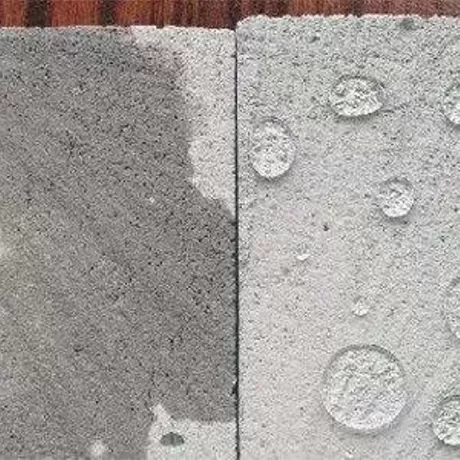
A representative published surface-treatment case involves organosilane modification of silica or glass. In untreated form, hydroxylated silica commonly shows high water affinity, while long-chain or methyl-functional silane treatment can move the static water contact angle into the hydrophobic range, often above 100 degrees when coverage and curing are well controlled. The exact value is not universal: roughness, droplet volume, advancing-versus-receding measurement, surface contamination, and treatment concentration can shift the result by tens of degrees. This is why a credible customer qualification should report the substrate, treatment concentration, reaction time, drying temperature, contact-angle method, and number of measurements.
For a real production-style evaluation, a silica manufacturer might compare a 0.5%, 1.0%, and 2.0% chlorosilane treatment, then measure moisture uptake after 24 hours at controlled relative humidity. If the 1.0% treatment reduces water uptake from 3.2% to 1.8% by mass and improves epoxy pull-off strength from 4.1 MPa to 5.6 MPa, the formulation team has measurable evidence. If only contact angle rises from 72 degrees to 108 degrees while pull-off strength remains unchanged, the process has improved hydrophobicity but not necessarily adhesion.
Identify whether the substrate is fumed silica, precipitated silica, glass, aluminum oxide, iron oxide, calcium carbonate, ceramic, or a metal surface. Measure or estimate surface hydroxyl density, particle size, moisture content, and specific surface area. Then identify the organic phase: epoxy, polyurethane, acrylic, silicone rubber, polyolefin, fluoropolymer, or another resin.
A methyl product may be suitable for water repellency but insufficient for polymer bonding. A vinyl product may be useful in an unsaturated resin but irrelevant in a saturated acrylic system. A phenyl product may improve compatibility with an aromatic resin while adding cost that does not benefit a commodity coating.
| Application objective | Initial product candidates | Key measurements |
|---|---|---|
| Reduce water adsorption on silica or glass | Methyltrichlorosilane, dimethyldichlorosilane, trimethylchlorosilane | Contact angle, water-vapor uptake, powder flow, surface energy |
| Improve composite adhesion | Vinyltrichlorosilane, chloropropyltrichlorosilane | Pull-off strength, tensile strength, wet aging, fracture morphology |
| Modify aromatic or optical interfaces | Phenyltrichlorosilane | Refractive index, haze, color, dielectric loss, thermal stability |
| Deactivate residual silanol groups | Trimethylchlorosilane | Hydroxyl content, adsorption, viscosity, storage stability |
Before approving a supplier, request a certificate of analysis covering assay, water content, hydrolyzable chlorine, acidity, color, density, viscosity, residual solvent, and relevant trace metals. For electronic or optical applications, ask for lot-specific chromatographic data and packaging validation. For industrial coatings, consistency between three consecutive lots may be more important than an exceptionally high assay on one sample.
Packaging should prevent atmospheric moisture from entering the container. Depending on the grade and local regulations, appropriate options may include sealed fluorinated bottles, lined metal containers, or drums with dry inert-gas protection. The supplier should provide storage temperature, shelf-life, first-opening instructions, and spill-response guidance. Because chlorosilanes can generate HCl upon contact with moisture, the site should also verify ventilation, scrubber capacity, emergency shower access, and compatible PPE.
Buyers should also separate the chemical cost from the total treatment cost. A product priced at USD 6 per kilogram may become more expensive overall if it requires dry-room operation, special scrubbers, high solvent consumption, or frequent rejected batches. Conversely, a higher-priced specialty grade may reduce dosage, improve yield, and lower total cost per treated square meter or per kilogram of filler.
The first error is adding a chlorosilane directly to a water-rich formulation. Hydrolysis may occur before the reagent reaches the substrate, producing HCl, oligomers, or deposits. The second is treating a dirty surface. Oil, surfactant residue, fingerprints, and loosely bound dust can prevent covalent attachment even when the chemistry is correct. The third is relying on contact angle as the only performance test. A higher contact angle demonstrates altered wetting, not necessarily stronger adhesion or better durability.
Another frequent mistake is using an excessive dosage. More reagent can increase unreacted residue, surface migration, odor, and coating defects. A practical starting matrix is often 0.25–2.0% active chlorosilane based on substrate mass, followed by optimization rather than assuming that the highest concentration will perform best. The exact range depends on surface area and functionality.
Finally, never compare supplier quotations without comparing assay, packaging, water specification, delivery term, and dangerous-goods charges. A low nominal price may represent a different purity or a non-equivalent grade.
The best product depends on the surface, resin, moisture level, required durability, and production scale. Methyltrichlorosilane and dimethyldichlorosilane are practical starting points for hydrophobic silica and mineral treatment; trimethylchlorosilane is useful for end-capping; vinyltrichlorosilane and chloropropyltrichlorosilane deserve evaluation for reactive composite interfaces; and phenyltrichlorosilane is aimed at specialty aromatic or optical systems.
For buyers comparing a China Chloro Silane Supplier, a chlorosilane supplier for coatings, or the best chlorosilane for silica surface treatment, the decision should be based on documented silane coupling agent performance, controlled hydrophobic surface treatment, and reproducible organosilicon chemistry. Confirm hydrolysis behavior, condensation conditions, contact angle, adhesion, water uptake, and HCl handling before placing a production order. Hocon can be contacted for product matching, specification review, sample coordination, and quotation comparison according to application, quantity, purity, and delivery requirements.
Previous:
NoneReady to Get Started?
Contact Hocon Organic Silicon Product suppliers today to bring your idea or design to life sooner!
Please complete the contact form and we aim to get back to you within 24 hours.
Related Products


Cas: N.A
Bis-Aminosilane Polymers are a class of organosilicon compounds characterized by dual amino functional groups (−NH 2−NH 2 or −NHR−NHR) attached to a silane backbone.
Cas: 63148-62-9
Our silicone conformal coating is a high-performance, solvent-based protective layer designed to safeguard electronic components against moisture, dust, chemicals, and temperature extremes. Ideal for printed circuit boards (PCBs), connectors, and sensitive electronics, it provides reliable insulation and long-term durability while maintaining flexi
Cas: 14808-60-7
Silica microspheres, also known as spherical silica powder, are high-purity, fine particles composed primarily of silicon dioxide (SiO₂) with a spherical morphology.
Our Market
Hocon International Co., Ltd. was established in 2015, is a manufacturer specializing in silicone products. Its product varieties include: organosilanes, silicone resin, silicone oil, modified silicone oil and their deep-processing products, the application fields of the products involve daily ...