Cas: N.A
News
The Professional manufacturer of Silicones、 Silanes 、 Silicone Additives & Polymers
 Nov. 23, 2026
For an engineer comparing a China Chloro Silane Supplier, the decision is rarely based on price alone. The practical questions are more specific: how to choose chlorosilanes for industrial applications, where to source a high-purity methyl chlorosilane supplier, and how to meet chlorosilane storage and handling requirements without disrupting production. The answer depends on the molecule’s functional group, water sensitivity, vapor pressure, assay, hydrolysis behavior, and compatibility with the intended process. In this guide, Hocon explains how methylchlorosilane chemistry, siloxane formation, silicon-wafer processing, and other industrial uses connect to measurable purchasing and process criteria.

Chlorosilanes are silicon-containing compounds in which one or more chlorine atoms are bonded directly to silicon. Their defining feature is chemical reactivity with moisture. A simplified hydrolysis reaction is:
RnSiCl4-n + H2O → RnSi(OH)4-n + HCl
The resulting silanol groups may condense into Si–O–Si bonds, producing siloxanes, silicone resins, surface films, or crosslinked networks. This reaction is useful in manufacturing, but uncontrolled moisture exposure can generate hydrogen chloride, increase viscosity, form particles, block valves, and change the final product’s molecular-weight distribution.
In practice, buyers are choosing a reaction profile rather than simply choosing a container of liquid. A silicon-wafer process may require low metals and stable vapor delivery, while a silicone intermediate may prioritize functional-group purity, hydrolytic stability, and predictable condensation. A release-coating formulation may require a controlled balance between hydride content and cure response. These are different specifications even when the products look similar on a catalog page.
Methylchlorosilanes such as methyltrichlorosilane, dimethyldichlorosilane, and trimethylchlorosilane are widely used as intermediates for silicone fluids, elastomers, resins, and surface-treatment agents.
The important selection variable is functionality. Increasing the number of chlorine substituents generally increases the number of hydrolyzable sites per molecule and can raise network density, but the actual result also depends on water ratio, catalyst, temperature, mixing, and removal of HCl.
Functional chlorosilanes are selected when a material needs a chemical bridge between an inorganic surface and an organic polymer. Typical functional groups include amino, vinyl, epoxy, methacrylate, alkyl, phenyl, and hydride groups.
| Functional type | Typical industrial purpose | Key evaluation point |
|---|---|---|
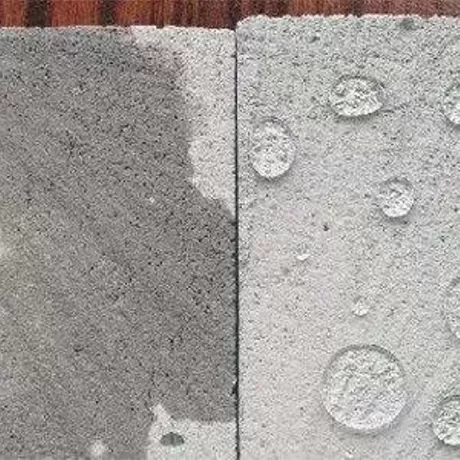
| Alkyl chlorosilane | Hydrophobic treatment of glass, minerals, fillers, and powders | Surface coverage, water contact angle, and residual chlorine |
| Vinyl chlorosilane | Reactive coupling with polymer or silicone systems | Vinyl assay, inhibitor profile, and cure compatibility |
| Amino-functional silane | Adhesion promotion for glass fiber, metals, and mineral substrates | Amine value, color, moisture content, and bond retention |
| Epoxy-functional silane | Improved bonding in epoxy and hybrid polymer systems | Epoxy equivalent, hydrolysis rate, and storage stability |
| Phenyl chlorosilane | Modification of refractive index, thermal behavior, and resin properties | Phenyl content, color, and trace-metal level |
Some chlorosilanes are used in semiconductor, photovoltaic, and advanced-material supply chains. In these applications, trace contamination can be more important than the main assay. Iron, nickel, copper, sodium, potassium, boron, phosphorus, and particulate contamination may affect deposition, electrical performance, or surface defects.
A procurement specification for high-purity use should therefore separate:
Start with the function the material must perform. Do not begin with a supplier’s product code. Ask whether the chlorosilane is intended to build a silicone backbone, terminate a chain, crosslink a coating, modify a mineral surface, improve adhesion, or serve as a precursor for deposition.
For example, a coating that must remain flexible may require lower effective crosslink density, while a heat-resistant resin may benefit from a multifunctional precursor. If the target is hydrophobicity, measure water contact angle and surface energy rather than relying on the phrase “excellent water resistance.” A meaningful internal target might be a contact angle above 100 degrees under a defined test method, but the correct value depends on the substrate and formulation.
Calculate the number of reactive Si–Cl groups introduced per mole of material. This determines the theoretical amount of water, alcohol, or another nucleophile required for controlled hydrolysis or substitution.
For a simplified hydrolysis process, one mole of Si–Cl theoretically consumes one mole of water and releases one mole of HCl. Industrial systems often use controlled excess water or staged addition, but excess moisture can increase local hydrolysis, particle formation, and heat release. The correct ratio should be established through a small-scale design-of-experiments program that tracks temperature, pH, viscosity, solids content, and particle size.
A useful technical specification should include test methods and acceptance limits. “High purity” is not a sufficient purchasing criterion. Depending on the application, the specification may include:
| Parameter | Why it matters | Typical control approach |
|---|---|---|
| Assay | Controls active chemistry and batch consistency | Gas chromatography, titration, or validated wet chemistry |
| Water | Prevents premature hydrolysis and HCl generation | Karl Fischer titration or an equivalent validated method |
| Acidity or chloride | Indicates hydrolysis, decomposition, or residual HCl | Acid-base titration, ion chromatography, or specification-specific testing |
| Color | Can reveal oxidation, contamination, or thermal degradation | APHA or an agreed visual/instrumental method |
| Density and refractive index | Fast incoming-lot identity checks | Temperature-controlled laboratory measurement |
| Trace metals | Important for electronic and optical applications | ICP-MS or ICP-OES after validated sample preparation |
Acceptance limits must be connected to actual product performance. If reducing water from 150 ppm to 50 ppm does not change cure time, adhesion, or defect rate, the tighter limit may add cost without adding value. Conversely, a few parts per million of a metal impurity may be unacceptable in a semiconductor process.
Vapor pressure, boiling point, viscosity, flash point, and density influence storage, transfer, dosing, and ventilation design. A low-boiling chlorosilane may be suitable for vapor delivery but difficult to handle in an open charging operation. A higher-boiling material may reduce evaporative loss but require heated lines or stronger pumping equipment.
Review the entire fluid path, including drums, bulk tanks, valves, gaskets, hoses, pumps, filters, and sampling ports. Materials of construction must be selected from compatibility data for the exact chemical, concentration, temperature, and exposure time. Stainless steel may be appropriate in some systems, while elastomers, plastics, or ordinary carbon steel may swell, embrittle, corrode, or permit moisture ingress.
Chlorosilanes should normally be handled in closed systems under dry nitrogen or another approved inert atmosphere. Packaging should protect the product from atmospheric moisture during transport, storage, sampling, and dispensing.
Ask the chloro silane manufacturer or distributor to document:
Record the moisture content of the incoming lot and again after opening or transfer when the process is moisture-sensitive. A simple moisture trend can reveal leaks, poor purging, or a deteriorating seal before the batch produces off-specification material.
Many chlorosilanes are flammable, corrosive, volatile, or moisture-reactive. Their hydrolysis can release hydrogen chloride, which is corrosive to tissue and equipment. A responsible evaluation includes the current Safety Data Sheet, transport classification, exposure-control strategy, ventilation design, gas detection, spill response, fire protection, and local chemical-registration requirements.
Do not select a product solely because it is chemically suitable. Confirm that the plant can safely unload it, store it, sample it, and dispose of residues. Operators should be trained in closed transfer, line purging, connection inspection, emergency isolation, and compatible neutralization procedures. Neutralization chemistry must be validated by the site’s safety team because rapid hydrolysis can release heat and acidic vapors.
Supplier qualification should include more than a sample approval. A practical program contains three stages:
A useful production trial should involve at least three separate lots when the process allows it. Track results using control charts rather than judging one successful batch. For example, if a silicone intermediate normally reaches a target viscosity of 500–700 mPa·s after 24 hours, record the full time-dependent profile and investigate any drift toward the upper limit.
Gelation often points to uncontrolled hydrolysis, excessive local water concentration, high functionality, contamination by basic or acidic species, or inadequate mixing. Check the water balance, addition order, mixing intensity, temperature profile, and line cleanliness. A dry-room test with controlled water addition can help distinguish raw-material variability from equipment-related moisture ingress.
Low adhesion may result from insufficient surface hydroxyl groups, excessive treatment concentration, incomplete hydrolysis, over-condensation before application, or incompatibility between the silane and polymer matrix. Measure substrate cleanliness, contact angle, treatment concentration, drying conditions, and peel or lap-shear strength. Report the test geometry and curing schedule because adhesion values cannot be compared without them.
Color development may indicate oxidation, trace-metal contamination, thermal exposure, or reaction with moisture. Compare retained samples against new lots, review warehouse temperature records, test acidity and water, and inspect the headspace system. A supplier should explain whether the product is stabilized and identify the permitted stabilizer concentration if one is used.
Cure variation can arise from changes in functional-group assay, inhibitor level, catalyst contamination, water content, or mixing energy. Define cure time with a measurable endpoint, such as gel time at a stated temperature, tack-free time at a specified film thickness, or conversion measured by spectroscopy. Avoid using “fast cure” without a number and a test condition.
Once the chemistry is understood, total cost should be evaluated across the entire process. A product with a lower drum price may create higher costs through lower yield, shorter shelf life, additional filtration, greater HCl scrubbing demand, or more frequent equipment cleaning.
Build a total-cost model using:
Supplier continuity also deserves a formal score. Review production capacity, backup raw-material sources, lot-release procedures, technical support, lead time, minimum order quantity, and change-control practices. Ask whether the supplier can provide pre-shipment documents and retain samples for each lot. Hocon can be included in a comparative supplier review when a buyer needs product matching, application discussion, or a structured quotation for chlorosilane materials.
A capable Chloro Silane Manufacturer should provide more than a product name and a nominal purity. The technical exchange should cover molecular structure, intended application, compatibility, analytical methods, packaging, transport, and scale-up conditions.
Before requesting a quotation, prepare a short technical brief containing:
This information allows Hocon to distinguish a general industrial grade from a specification designed for silicone synthesis, surface treatment, photovoltaic materials, or electronic applications. It also reduces the risk of receiving a chemically similar product that cannot be integrated into the existing equipment or quality system.
The best chlorosilane is the one that delivers the required chemical function with controlled moisture sensitivity, reproducible impurity levels, safe packaging, and measurable performance in the finished process. Whether the requirement involves methylchlorosilane for silicone intermediates, a functional silane for adhesion promotion, a siloxane precursor for surface treatment, or high-purity material for silicon-wafer manufacturing, the selection should move from molecular structure to specification, qualification, equipment compatibility, and total cost.
For companies comparing a China Chloro Silane Supplier, searching for a high-purity chlorosilane manufacturer, or defining chlorosilane storage and handling requirements, Hocon can support product selection and technical communication. Discuss the target application, required assay, moisture limit, packaging format, and validation plan with Hocon before ordering. A structured approach to methylchlorosilane selection, siloxane process control, and hydrolysis management can reduce off-specification batches, improve production consistency, and create a safer industrial supply chain.
Ready to Get Started?
Contact Hocon Organic Silicon Product suppliers today to bring your idea or design to life sooner!
Please complete the contact form and we aim to get back to you within 24 hours.
Related Products


Cas: N.A
Bis-Aminosilane Polymers are a class of organosilicon compounds characterized by dual amino functional groups (−NH 2−NH 2 or −NHR−NHR) attached to a silane backbone.
Cas: 63148-62-9
Our silicone conformal coating is a high-performance, solvent-based protective layer designed to safeguard electronic components against moisture, dust, chemicals, and temperature extremes. Ideal for printed circuit boards (PCBs), connectors, and sensitive electronics, it provides reliable insulation and long-term durability while maintaining flexi
Cas: 14808-60-7
Silica microspheres, also known as spherical silica powder, are high-purity, fine particles composed primarily of silicon dioxide (SiO₂) with a spherical morphology.
Our Market
Hocon International Co., Ltd. was established in 2015, is a manufacturer specializing in silicone products. Its product varieties include: organosilanes, silicone resin, silicone oil, modified silicone oil and their deep-processing products, the application fields of the products involve daily ...