Oct. 21, 2026
For buyers comparing a China Chloro Silane Supplier, the main problem is rarely a lack of quotations. It is the risk that inconsistent chlorosilane manufacturing, variable hydrolysis behavior, or incomplete safety documentation will cause a batch of functional silanes to fail in sealants, coatings, composites, or photovoltaic materials. A qualified chlorosilane manufacturer for functional silanes should therefore provide stable methylchlorosilane intermediates, traceable quality data, and process support. Hocon serves this demand with silicon-based intermediates and application-oriented technical communication for customers working with silane coupling agents, silicone intermediates, and surface modification.

Chloro Silane Manufacturer Market Situation: Why Functional Silanes Are Gaining Attention
Chlorosilanes are reactive silicon compounds, including methylchlorosilanes, phenylchlorosilanes, and other organochlorosilanes, used to manufacture silicones, silane coupling agents, surface-treatment chemicals, and specialty materials. They are not interchangeable with finished functional silanes. Chlorosilanes are often upstream intermediates; functional silanes are engineered products containing organic reactive groups such as amino, epoxy, vinyl, methacrylate, or sulfur functionality.
The commercial shift is being driven by a practical requirement: manufacturers want one additive to improve adhesion, moisture resistance, dispersion, mechanical strength, or electrical performance without redesigning an entire formulation. In a glass-fiber composite, for example, a silane coupling agent can chemically connect an inorganic glass surface with an organic resin. In a sealant, an amino- or epoxy-functional silane can improve bonding to concrete, metal, glass, or ceramic. In coatings, a silane can support crosslinking and reduce interfacial failure.
Demand is also connected to large downstream industries. The International Energy Agency reported in Renewables 2024 that global renewable power capacity additions reached approximately 510 GW in 2023, with solar photovoltaics accounting for the largest share. China’s National Energy Administration reported that China added approximately 277 GW of new solar power capacity in 2024, taking cumulative solar capacity to about 887 GW. These figures do not represent functional-silane consumption directly, but they demonstrate the scale of the photovoltaic, electrical, construction, and materials ecosystem in which silicon-based chemicals are used.
At the same time, buyers face tighter requirements for worker protection, emissions control, product stewardship, and transport. Chlorosilanes react with moisture and may release hydrogen chloride. This means price per kilogram is only one part of total cost. A lower-priced material can become more expensive if it causes off-spec batches, corrosion, additional ventilation requirements, or delayed dangerous-goods transport.
Key Drivers Behind Functional Silane Demand
Chloro Silane Manufacturer Demand Driver 1: Better Adhesion in Multimaterial Products
Modern products increasingly combine materials with different surface chemistry: aluminum with polymer, glass with resin, mineral filler with rubber, and concrete with sealant. These interfaces are natural weak points. Functional silanes address this problem by carrying two types of reactivity: a silicon-containing group that can interact with hydroxylated inorganic surfaces and an organic group that reacts with, or becomes compatible with, the polymer matrix.
The value is measurable through the buyer’s own test method. Instead of asking whether a product has “excellent adhesion,” procurement teams should request lap-shear strength, peel strength, tensile adhesion after water aging, or retention after heat exposure. For example, a sealant producer can compare adhesion before and after 7, 14, and 28 days of water immersion. A composite producer can compare interlaminar shear strength before and after humidity conditioning. The correct silane is the one that improves the required test result at the target dosage, not necessarily the one with the highest active content.
Chloro Silane Manufacturer Demand Driver 2: Lightweight Composites and Electric Vehicles
Electric vehicles, battery enclosures, charging equipment, and lightweight transportation components use polymers, aluminum, glass fiber, carbon fiber, adhesives, and coatings in the same assembly. Functional silanes can improve bonding and filler dispersion while helping formulators reduce the amount of heavy metal or mechanical fastening in selected applications.
The opportunity is application-specific. A silane used in a glass-fiber-reinforced polyamide is not automatically suitable for a moisture-curing adhesive or a battery potting compound. The formulator must consider the resin’s functional groups, curing temperature, moisture level, catalyst system, filler loading, and electrical requirements. For battery-related applications, ionic contamination, volatile content, dielectric strength, and thermal aging data can be more important than a simple tensile-strength result.
Chloro Silane Manufacturer Demand Driver 3: Renewable Energy and Longer Service Life
Photovoltaic modules, inverters, junction boxes, cables, and related equipment operate outdoors for years under ultraviolet radiation, temperature cycling, humidity, and mechanical stress. Silane-modified polymers and silicone-based materials are used in selected encapsulation, bonding, sealing, and insulation applications because they can provide moisture resistance and flexible adhesion.
The correct purchasing question is not “Is the silane suitable for solar power?” It is “Which accelerated aging result does the silane improve, under which formulation and dosage?” Buyers should request data from damp-heat exposure, thermal cycling, UV aging, volume resistivity, dielectric breakdown, and adhesion-retention tests where relevant. Test conditions should be stated because a result at 85°C and 85% relative humidity is not directly comparable with a result from a different aging protocol.
Chloro Silane Manufacturer Demand Driver 4: Construction Sealants and Coatings
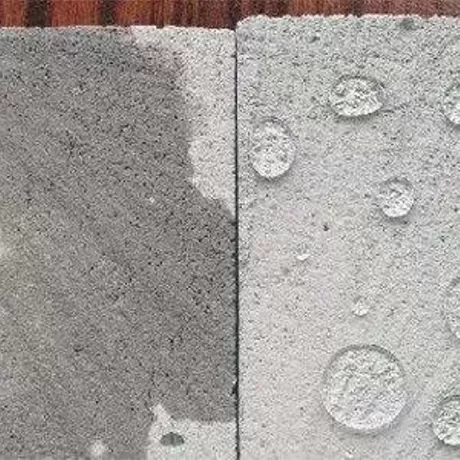
Construction remains one of the largest application areas for adhesion promoters, sealants, and water-repellent treatments. Functional silanes are used in moisture-curing systems, hybrid polymers, primers, concrete treatments, and protective coatings. Demand is supported by renovation, infrastructure maintenance, energy-efficient buildings, and the need to bond dissimilar substrates.
For a construction-chemical buyer, formulation compatibility is critical. An amino silane may accelerate certain reactions but can also affect color, odor, storage stability, or pot life. An epoxy silane may provide strong adhesion to mineral surfaces but require a compatible resin and curing environment. A vinyl or methacrylate silane may be more appropriate for unsaturated polymer systems. The choice should be made from the complete formulation, not from the silane name alone.
Emerging Chloro Silane Manufacturer Trends to Watch
Trend 1: Higher-Purity and Application-Specific Chlorosilanes
Commodity production remains important, but downstream customers increasingly ask for controlled impurity profiles. Trace metals, residual acid, water content, color, chloride level, and oligomer content can influence polymerization, catalyst activity, electrical performance, and storage stability.
This is particularly important when a chlorosilane is converted into a high-value functional silane. A small variation in upstream material can change reaction selectivity, purification load, odor, or final color. Suppliers are therefore moving toward tighter specifications, batch traceability, and customer-specific quality agreements rather than one universal specification sheet.
A practical specification should include a test method for every critical limit. “High purity” has little value without a numerical value, such as water content below a stated ppm level, a defined assay range, or a maximum concentration for a named impurity. The buyer should also confirm whether the result is measured at release, after storage, or after transport simulation.
Trend 2: Low-Emission and Safer Formulation Design
Regulators and building-material customers are placing greater emphasis on volatile organic compounds, worker exposure, hazardous classification, and life-cycle impacts. This is pushing formulators to evaluate lower-emission silane systems, more efficient dosage, water-compatible products, and manufacturing routes that reduce solvent use and by-products.
Safety improvements must be demonstrated rather than described with general terms. A buyer should request the Safety Data Sheet, transport classification, flash point where applicable, hydrolysis information, occupational exposure guidance, and packaging instructions. For chlorosilanes, moisture exclusion is essential because contact with water can generate corrosive hydrogen chloride and heat. Closed transfer, dry nitrogen blanketing, compatible valves, secondary containment, and emergency response procedures should be reviewed before commercial delivery.
Trend 3: More Silane Solutions for Water-Based and Hybrid Systems
Water-based coatings, adhesives, and dispersions are expanding in applications where odor, solvent emissions, and workplace conditions matter. However, silanes can hydrolyze, condense, or destabilize in water-based formulations. This creates demand for products with controlled hydrolysis rates, improved storage stability, and better compatibility with acrylic, polyurethane, epoxy, and mineral systems.
The relevant technical terms are hydrolysis, condensation, and sol-gel chemistry. Hydrolysis converts alkoxy groups into silanol groups in the presence of water; condensation then forms siloxane bonds and can lead to particle growth or gelation. The actual result depends on pH, water content, temperature, concentration, solvent, catalyst, and time. Therefore, a supplier’s shelf-life statement should be supported by storage data in the customer’s intended formulation.
Trend 4: Digital Quality Control and Supply-Chain Traceability
Functional-silane customers increasingly require more than a certificate of analysis. They want production-batch identification, raw-material traceability, retain samples, change-notification procedures, and records that support ISO-based quality systems. Digital documentation can shorten approval cycles and help identify the source of a failure when a downstream formulation changes viscosity, cure speed, color, or adhesion.
For multinational buyers, documentation may also include REACH status, UK REACH or other regional registration information, GHS labeling, transport documents, technical data sheets, and declarations related to restricted substances. The exact requirement depends on the destination market and the intended use. A supplier should not claim universal regulatory compliance without identifying the jurisdiction, substance identity, registration status, and volume band.
Trend 5: More Regional Capacity and Dual-Sourcing
Chlorosilane and silicone supply chains are capital-intensive and sensitive to energy, chlorine, silicon metal, logistics, and plant utilization. Disruptions can affect delivery schedules even when global production capacity appears sufficient. Buyers are responding by qualifying a primary and secondary supplier, holding safety stock for critical grades, and separating technical approval from final price negotiation.
Dual-sourcing does not mean buying two chemically different products. The alternate grade must be validated for assay, impurity profile, hydrolysis behavior, reaction yield, packaging, and performance in the final application. A substitution trial should include at least one normal batch and one deliberately challenging batch, such as high humidity, high filler loading, or extended storage.
What These Trends Mean for Buyers of Chlorosilane and Functional Silanes
Buyers are moving from transactional purchasing to total-cost and performance-based sourcing. The most useful supplier comparison includes five categories:
- Technical consistency: assay, water content, acidity, color, viscosity, impurity limits, and batch-to-batch variation.
- Application performance: adhesion, tensile strength, modulus, elongation, water resistance, thermal aging, electrical properties, or dispersion results required by the end product.
- Process fit: reaction yield, dosing window, mixing order, cure profile, storage stability, and compatibility with existing equipment.
- Safety and compliance: current Safety Data Sheet, GHS classification, transport information, exposure controls, packaging, and regional regulatory documentation.
- Supply reliability: lead time, minimum order quantity, annual capacity, production-site information, change-control policy, and contingency planning.
A functional silane can appear inexpensive at the drum level but become costly if the formulation needs twice the dosage or if it increases rejection rates. Buyers should calculate cost per accepted unit, not simply cost per kilogram. The calculation can include silane dosage, raw-material price, yield loss, rework, energy, testing, waste treatment, freight, and inventory carrying cost.
How to Evaluate a China Chloro Silane Supplier
Chloro Silane Manufacturer Due Diligence Checklist
Before requesting a long-term contract, ask the supplier for a technical package that answers the following questions:
- What is the exact chemical name, CAS identity, assay range, and major impurity profile?
- Is the product a chlorosilane intermediate or a finished functional silane?
- Which analytical methods are used for assay, water, acidity, color, and trace impurities?
- What is the recommended storage temperature and maximum storage period?
- What packaging prevents moisture ingress during storage and transport?
- How are batch changes, raw-material changes, and plant changes communicated?
- Can the supplier provide samples from multiple production batches?
- What technical support is available for hydrolysis, dilution, blending, and application testing?
- Which documents are supplied for the destination country?
Audits should focus on process control, not only on the appearance of the factory. Review moisture management, reactor cleaning, sampling procedures, calibration, deviation handling, waste-gas treatment, emergency systems, warehouse segregation, and finished-product release. Chlorosilane handling requires equipment and procedures designed for corrosive, moisture-sensitive materials; a generic chemical warehouse may not provide sufficient control.
Chloro Silane Manufacturer Sample-Approval Process
A structured approval process reduces the chance of confusing laboratory success with production success:
- Define the failure mode: poor wet adhesion, low filler dispersion, short shelf life, high viscosity, corrosion, odor, or electrical instability.
- Set numerical acceptance criteria: for example, adhesion retention after a specified aging cycle or viscosity change after a specified storage period.
- Test at several dosages: the optimum may be lower or higher than the supplier’s general recommendation.
- Run formulation compatibility tests: evaluate resin, filler, catalyst, solvent or water content, pH, and mixing sequence.
- Complete a pilot batch: confirm mixing, filtration, curing, packaging, and production-line behavior.
- Approve the supply specification: include critical impurities, test methods, packaging, change notification, and release documentation.
Practical Recommendations for Manufacturers and Procurement Teams
For Formulators
Start with the substrate and failure mechanism. If the problem is loss of adhesion after humidity exposure, select candidates based on wet-aging performance rather than dry tensile strength. If the problem is filler agglomeration, evaluate surface treatment, mixing energy, filler moisture, and silane dosage together. If the problem is storage instability, study hydrolysis and condensation kinetics under actual pH and water conditions.
Do not transfer a supplier’s recommended dosage directly into production. A useful laboratory design can test three dosage levels, two moisture levels, and at least two aging conditions. Record viscosity, cure time, adhesion, mechanical properties, and appearance. This produces a formulation window instead of a single pass-or-fail result.
For Procurement Teams
Use a weighted scorecard. For a moisture-sensitive chlorosilane, safety and packaging may receive a higher weight than nominal price. For an automotive adhesive, lot consistency, technical support, and change control may be more important than a small freight difference. For a commodity intermediate, capacity, delivery reliability, and assay may dominate.
Request a written change-notification period and define what constitutes a material change. A new raw-material source, reactor, purification step, manufacturing location, or packaging format can affect performance even when the final assay remains within specification.
For EHS and Compliance Managers
Confirm that the site can receive, store, transfer, and dispose of the material safely. Review moisture exclusion, ventilation, corrosion-resistant materials, spill response, incompatible chemicals, employee training, and waste neutralization. The Safety Data Sheet should be current for the destination market and consistent with the actual product classification.
Why Hocon Is Relevant to the Functional Silane Supply Chain
Hocon’s role should be evaluated through the same evidence-based criteria applied to any China Chloro Silane Supplier: product identity, analytical control, application support, documentation, packaging, and supply continuity. For customers converting chlorosilane intermediates into functional materials, the most valuable supplier is not simply the one offering the lowest quotation. It is the one that can explain how the material behaves during hydrolysis, purification, blending, storage, and final application.
Buyers should ask Hocon for the current technical data sheet, Safety Data Sheet, certificate of analysis, available packaging, sample-batch information, recommended storage conditions, and application-specific test support. These documents allow the customer to compare Hocon with alternative suppliers using the same measurable criteria and to identify whether the product fits sealants, coatings, composites, photovoltaic materials, or other silicone-based systems.
Conclusion: Demand Will Follow Measurable Performance
The chlorosilane industry is being shaped by the expansion of renewable energy, electric vehicles, composites, construction chemicals, and high-performance coatings. The strongest demand is not simply for more silicon chemistry; it is for reproducible interfacial performance, lower emissions, safer handling, traceable supply, and formulations that remain stable during real-world aging.
For buyers, the practical path is clear: distinguish chlorosilane intermediates from finished functional silanes, define numerical performance targets, verify hydrolysis and storage behavior, audit safety controls, and qualify at least one technically credible alternative source. A reliable chloro silane manufacturer should support that process with test methods, batch data, regulatory documentation, and transparent change control. As the market becomes more specialized, silane coupling agents, silicone intermediates, and surface modification technologies will be judged less by broad marketing claims and more by conversion yield, aging retention, dosage efficiency, and total cost per accepted product.
Sources and Fact-Checking Notes
- International Energy Agency, Renewables 2024: used for the reported global renewable-capacity additions in 2023 and the leading role of solar photovoltaics.
- National Energy Administration of China, 2024 national power-industry statistics: used for China’s reported 2024 solar-capacity additions and cumulative installed solar capacity.
- European Chemicals Agency, substance and safety guidance: used to support the need for classification, labeling, registration review, and safe handling of moisture-reactive chemical substances.
- United Nations Globally Harmonized System of Classification and Labelling of Chemicals: used as the basis for discussing GHS safety documentation and hazard communication.
- Dow, Evonik Industries, Shin-Etsu Chemical, Wacker Chemie, and Momentive product and technical literature: reviewed for common functional-silane applications, including adhesion promotion, surface treatment, composites, coatings, sealants, and silicone-related materials. Product-specific performance must still be verified under the customer’s own formulation and test conditions.