If you are interested in our products or would like to learn more information, please contact us
|
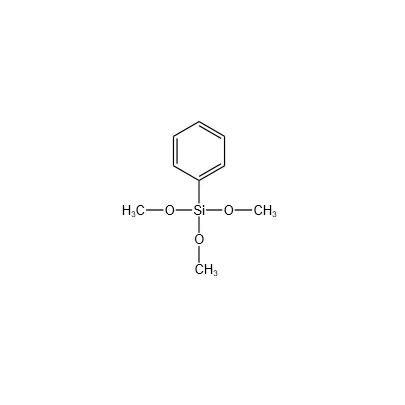
CAS号 CAS No. |
2996-92-1 |
|
分子式 Molecular Formula |
C9H14O3Si |
|
分子量 Molecular Weight |
198.29 |
|
沸 点 Boiling Point |
233 °C |
|
闪 点 Flash Point |
94°C |
|
外 观 Color and Appearance |
无色透明液体 Colorless transparent liquid |
|
密 度 Related Density |
1.062 g/mL |
|
熔点/凝固点 Melting point/freezing point |
-25°C |
|
含 量 Min. Purity |
Min 98% |
Application:
1. Coupling Agent & Surface Treatment
Inorganic Filler Modification: Acts as a coupling agent for glass fiber, talc, kaolin, etc., significantly improving filler‑resin (epoxy, polyester, PP/PA) compatibility. Increases composite mechanical strength by 30%–50% and reduces water absorption by >40%, suitable for automotive parts, electronic housings, wind‑turbine blades, etc.
Substrate Surface Activation: Treats metal, glass, and ceramic surfaces to enhance coating/adhesive adhesion, improving corrosion resistance and durability.
2. Polymer Material Modification
Resin Modification: Modifies epoxy, phenolic, and polyurethane resins by introducing siloxane bonds and phenyl groups. Enhances heat resistance (service temperature >200 ℃), dielectric properties, and crack resistance for electronic packaging and high‑temperature coatings.
Rubber Modification: Serves as a cross‑linking agent for silicone rubber, improving tensile strength, tear strength, and extending the operating temperature range (–60 ℃ to 220 ℃). Suitable for aerospace seals, automotive damping parts, and medical silicone products.
3. Coatings & Adhesives
Coating Additive: Functions as an adhesion promoter and scratch‑resistance agent, improving weather resistance, chemical resistance, and hardness in industrial anti‑corrosion coatings, automotive coatings, and wood coatings.
Adhesive Modification: Enhances the bonding performance of PU/epoxy adhesives on difficult‑to‑bond substrates (plastics, ceramics), while improving high‑/low‑temperature resistance and aging resistance for electronic component bonding and construction structural adhesives.
4. Fine Chemicals & Advanced Materials
Silicone Synthesis: Used to produce methyl phenyl silicone resins and specialty silicone oils with excellent lubricity and radiation resistance for precision machinery lubrication and electronic insulating materials.
Pharmaceutical/Agrochemical Intermediates: Serves as a silicon‑based protecting group or nucleophile in drug synthesis and pesticide production.
Ceramic Matrix Composites: Acts as a ceramic precursor for high‑temperature (>1000 ℃) ceramic matrix composites in defense and aerospace engine applications.
Optical Materials: Used in synthesizing high‑refractive‑index optical resins and lens coatings, improving light transmittance (≥95%) and scratch resistance.
Packaging and Storage:
Product Shelf Life: 12 months
Packaging: Supplied in 200L iron drums or custom packaging (200L closed-head galvanized iron drums). Designed for moisture-proof and shock-resistant transport.
Storage: Keep container tightly sealed in a cool, dry place. Avoid direct sunlight and high-temperature environments.
Safety & Handling:
Due to its chemical nature, the product may react with other substances. Conduct thorough testing and evaluation before use.
Wear appropriate personal protective equipment (PPE) and follow relevant safety procedures during handling.
Avoid direct contact with skin and eyes. In case of contact, rinse immediately with plenty of water and seek medical attention promptly.
Special Note:
The product descriptions, technical specifications, usage recommendations, and related data provided above are compiled based on current scientific knowledge and experimental data, with professionalism and integrity. However, the actual performance of the product may vary due to uncontrollable factors such as transportation and storage conditions, external environments, supporting facilities, and user technical capabilities. Users must independently evaluate the suitability of the product for their intended applications. Before using the product, users should conduct sufficient testing to determine whether it meets their specific requirements.
Ready to Get Started?
Contact Hocon Organic Silicon Product suppliers today to bring your idea or design to life sooner!
Please complete the contact form and we aim to get back to you within 24 hours.
Related Products


Cas: 807-28-3
1,3-Dimethyl-1,1,3,3-tetraphenyldisiloxane is a high-phenyl-content organosilicon intermediate. Featuring a unique symmetrical molecular structure with “dual methyl and tetraphenyl” groups, it combines the high heat resistance, radiation resistance, and excellent optical properties of phenylsiloxanes with the good compatibility of methylsiloxanes. It serves as a key raw material for preparing high-performance phenyl silicone rubber, silicone resins, optical materials, and high-temperature-resistant coatings, as well as a chain-terminating agent for phenyl silicone oils. The product is widely suitable for material upgrade requirements in precision fields such as aerospace, electronic information, and high-end manufacturing.
Cas: 546-45-2&77-63-4&34239-75-3
Methylphenyl cyclosiloxane mixture is a key intermediate for the preparation of high-performance polysiloxane materials, as well as a versatile organosilicon compound. It refers to cyclic siloxanes where each silicon atom is substituted with both methyl and phenyl groups simultaneously. High-purity methylphenyl cyclosiloxane free of trifunctional impurities serves as one of the raw materials for manufacturing high-temperature vulcanized (HTV) methylphenyl silicone rubber. In addition, methylphenyl cyclosiloxane features excellent physiological inertness, surface activity, aging resistance, UV radiation resistance and light transmittance, with the characteristics of non-toxicity and odorlessness. It is widely used as a primary and auxiliary agent in cosmetics, and can also be applied in the pharmaceutical and medical and health industries. Leveraging its unique phenyl-modified structure, which integrates the stability of methylsiloxane and the special functionalities of phenyl groups, it provides core material support for high-end electronics, aerospace, medical protection and other fields, and is an indispensable basic organosilicon raw material for high-end manufacturing.
Cas: 791-31-1
Triphenylsilanol is a specialty organosilicon compound that combines ultimate structural stability with high-efficiency interfacial reactivity. In its molecular structure, the triphenyl groups endow materials with outstanding thermal resistance, radiation resistance, yellowing resistance and mechanical toughness through the steric hindrance effect. The hydroxyl groups (-OH) possess direct condensation reactivity; without the intermediate hydrolysis step, they can rapidly form stable chemical bonds with silanols, hydroxyl resins and hydroxyl groups on filler surfaces. As a core functional additive for high-end silicone resin crosslinking, specialty organosilicon modification and precision filler functionalization, the product leverages the dual advantages of stable performance without attenuation and high reaction efficiency. It is widely used in fields with stringent requirements for material performance and processing precision, such as aerospace, high-end electronic manufacturing, medical devices, special coatings and precision composites, providing comprehensive performance assurance for end products. Its additional applications are as follows: Surfactant: Triphenylsilanol can serve as a surfactant with excellent surface tension reduction capability, and is widely used in various chemical and industrial applications. Wetting Agent: It can also be used to improve the wetting properties of certain materials, such as coatings, dyes and paints. Papermaking Additive: It acts as a papermaking additive to enhance the wet strength and wettability of paper. Sealing Wax Agent: In electronic assembly and packaging processes, triphenylsilanol can be used as a sealing wax agent to improve the adhesion and heat resistance of packaging materials.
Cas: 1829-41-0
Triphenylmethoxysilane is a specialty organosilicon compound combining ultimate structural stability with high-efficiency reactivity. In its molecular structure, the triphenyl groups endow materials with outstanding thermal resistance, radiation resistance, yellowing resistance and mechanical toughness, while the methoxy groups provide precise cross-linking and interfacial bonding capabilities. It serves as a core functional additive for high-end silicone resin synthesis, specialty organosilicon modification and filler modification under harsh environments. Widely used in aerospace, nuclear industry, high-end electronic manufacturing, medical devices, special coatings and other fields with stringent material performance requirements, it provides comprehensive performance assurance for end products.
Our Market
Hocon International Co., Ltd. was established in 2015, is a manufacturer specializing in silicone products. Its product varieties include: organosilanes, silicone resin, silicone oil, modified silicone oil and their deep-processing products, the application fields of the products involve daily ...